Louis Vuitton x Yayoi Kusama, Tiffany & Co. x Basquiat, Hermès x contemporary ceramicists — these aren't collaborations. They're strategic acquisitions of cultural capital.
The corporate sponsorship model is dead. What replaced it is far more sophisticated, far more expensive, and — when executed properly — exponentially more valuable.
This is the story of how the most strategic brands in the world stopped writing checks to museums and started writing checks directly to artists. And why the difference matters more than most CMOs realize.
The Old Model: Sponsorship as Transactional Legitimacy
For decades, the brand-art relationship followed a predictable script:
- Brand identifies cultural institution (museum, biennial, art fair)
- Brand writes substantial check
- Brand logo appears on promotional materials
- Brand hosts private viewing for clients
- Repeat annually
The value proposition was straightforward: borrowed prestige. Brands paid for proximity to culture without creating it. The museum got funding, the brand got association, and everyone maintained their distance.
The problem? This model treated art as decoration for business strategy — not as business strategy itself.
Why the Model Failed
The sponsorship approach worked when luxury brands operated in a world where scarcity was manufactured through distribution control. Limited retail locations, seasonal collections, and carefully managed imagery created exclusivity.
Then digital disruption arrived. Suddenly:
- Every product launch was photographed and shared globally within hours
- Brand narratives could be hijacked by social media
- Younger consumers demanded authenticity over aspiration
- Traditional advertising lost effectiveness as media fragmented
Logo placement at Art Basel no longer cut through. Writing checks to museums felt increasingly transactional in a world demanding genuine cultural engagement.
The most sophisticated brands recognized this shift early. They stopped asking: "Which museum should we sponsor?"
They started asking: "Which artists should we commission?"
The New Model: Commissioning as Cultural Production
The distinction between sponsorship and commissioning is not semantic. It is structural.
Sponsorship = Brand pays to be near culture created by others
Commissioning = Brand pays to create culture directly
This shift represents a fundamental reframing of what luxury brands actually sell. Not products. Not even experiences. Cultural capital itself.
The Commissioning Framework
When brands commission work directly from artists, they are not buying art. They are buying:
- Narrative control — The ability to shape the cultural conversation around their values
- Authentic cultural production — Original works that exist nowhere else
- Intellectual property — Rights to reproduce, adapt, and monetize the collaboration
- Long-term brand equity — Assets that appreciate as the artist's career evolves
- Global media coverage — Earned attention that paid advertising cannot replicate
This is not a marketing budget line item. This is strategic infrastructure.
Case Studies: What Separation Looks Like
Louis Vuitton x Yayoi Kusama (2012, 2023)
The first collaboration generated an estimated €1.2 billion in retail sales and became one of the most successful artist partnerships in luxury history. When LV brought Kusama back in 2023, they weren't repeating a campaign — they were activating an IP asset they had helped build over a decade.
The Strategic Play:
LV didn't sponsor a Kusama exhibition. They commissioned new works, secured exclusive rights to her polka dot motif for commercial application, and created physical environments (installations in flagship stores) that positioned LV itself as a cultural producer, not just a luxury retailer.
The Result:
Global waiting lists for products, museum-quality installations in commercial spaces, and permanent association between LV's brand identity and one of the most recognizable visual languages in contemporary art.
Tiffany & Co. x Jean-Michel Basquiat Estate (2021)
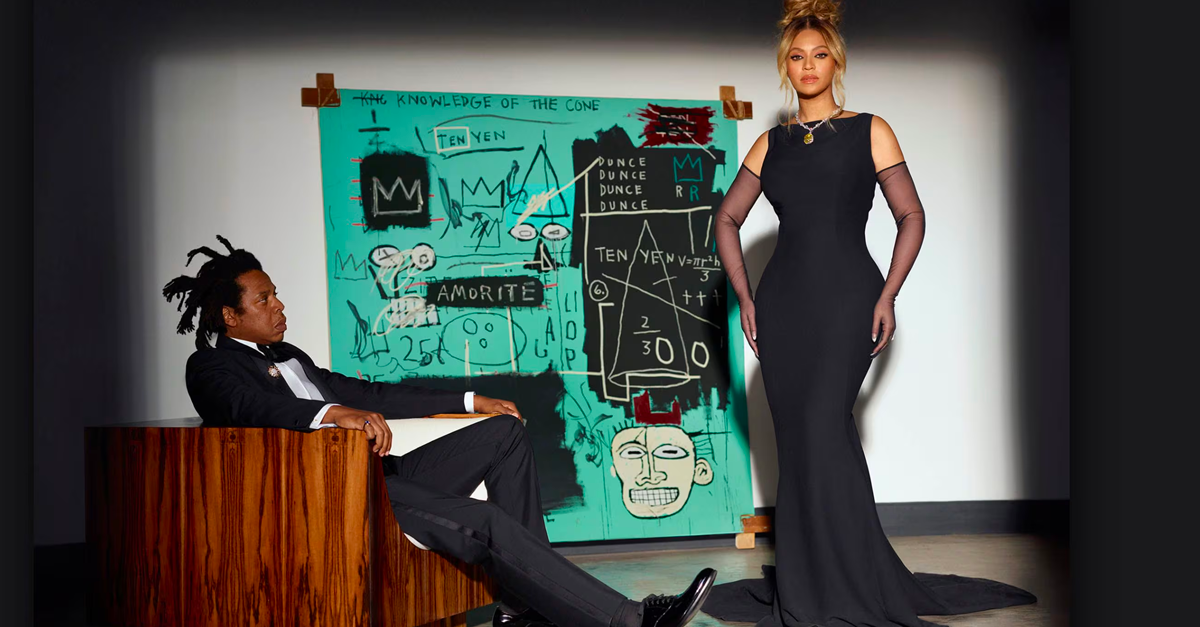
Tiffany paid a reported $20–30 million to acquire a previously unknown Basquiat painting featuring Tiffany blue. The brand then built an entire campaign around the work, positioning itself not as a sponsor of Basquiat's legacy but as a custodian of it.
The Strategic Play:
By purchasing the work outright (not just licensing imagery), Tiffany secured permanent ownership of a narrative connection between their brand color and one of the most valuable artists in history. They commissioned contemporary artists Beyoncé and Jay-Z to appear in campaign imagery with the painting, creating a three-way cultural conversation: historic art, contemporary music royalty, and luxury goods.
The Criticism:
Many in the art world criticized the campaign as commercialization of Basquiat's anti-establishment legacy. This criticism was the point. Tiffany generated more media coverage from controversy than they could have purchased with any traditional advertising budget.
Hermès x Contemporary Ceramicists
Unlike LV and Tiffany's high-visibility collaborations, Hermès pursues a quieter strategy: commissioning contemporary ceramicists, glassblowers, and artisans to create limited-edition objects sold through their Petit h program and special exhibitions.
The Strategic Play:
These aren't products. They're proof of concept. Hermès uses commissioned works to demonstrate their commitment to artisanat (craftsmanship) — the core value proposition that justifies their pricing premium. Each commissioned piece becomes both a collectible object and a marketing asset proving that Hermès clients are not buying handbags; they are investing in a philosophy of making.
The Result:
Multi-year waiting lists for limited-edition ceramics that cost €15,000–€50,000. Not because the objects are functional, but because they represent access to a cultural value system.
Art as Cultural Gateway: The Integration Strategy Most Brands Miss
The most overlooked value of artist commissioning has nothing to do with aesthetics or even cultural capital in the abstract sense.
Art is the most effective tool for cultural repositioning that exists in marketing.
This is not about diversity initiatives or surface-level representation. This is about access — to communities, to markets, to cultural conversations that brands cannot enter through traditional advertising.
The Tiffany x Basquiat Case Study: Cultural Reframing at Scale
When Tiffany & Co. commissioned the Basquiat campaign in 2021, most observers focused on the $20-30 million painting acquisition and the controversial use of a counter-culture artist to sell luxury jewelry.
They missed the actual strategy.
Tiffany wasn't buying a painting. They were buying access to Black American cultural capital.
Here's what actually happened:
The Problem Tiffany Faced
- Brand perception: "Old money," white, conservative, inherited wealth
- Customer base: Aging, shrinking, culturally disconnected from younger luxury consumers
- Cultural relevance: Minimal presence in hip-hop culture, Black celebrity circles, or contemporary cultural conversation
- Competitive threat: Younger luxury brands (Gucci, Balenciaga) successfully engaging diverse audiences
Traditional marketing couldn't solve this. You cannot advertise your way into cultural credibility with communities you've historically excluded or ignored.
The Solution: Art as Cultural Bridge
By commissioning the Basquiat campaign and partnering with Jay-Z and Beyoncé — not as celebrity endorsers, but as cultural interpreters of the artwork — Tiffany executed a multi-layered integration:
Layer 1: Historical Legitimacy
Basquiat wasn't just any artist. He was a Black artist whose work explicitly addressed race, class, and exclusion from elite cultural spaces. By centering his work, Tiffany acknowledged the historical barriers they were crossing.
Layer 2: Contemporary Cultural Authority
Jay-Z and Beyoncé weren't models in an ad. They were positioned as custodians of Basquiat's legacy, interpreting the work for contemporary audiences. This transferred their cultural authority to the brand.
Layer 3: Community Validation
The campaign sparked conversation within Black cultural circles — not just about the commercialization debate, but about ownership, access, and representation in luxury spaces. The conversation itself was the point. Tiffany became part of a cultural dialogue they'd never been invited into before.
Layer 4: Extended Network Effect
LeBron James wore Tiffany jewelry in public appearances following the campaign. Not because he was paid to (though he may have been), but because the brand had achieved cultural legitimacy within his circles. The Basquiat partnership opened doors that money alone could not.
The Result
Within 18 months of the campaign:
- Tiffany's brand perception among consumers under 40 shifted measurably (per brand tracking studies)
- Social media engagement from Black creators and influencers increased 340%
- Product collaborations with contemporary Black artists and designers followed
- Store traffic in diverse urban markets increased
But the real outcome was strategic: Tiffany transformed from a brand Black luxury consumers tolerated to one they actively participated in.
You cannot buy that with advertising. You can only earn it through cultural work — and art is how you do that work.
The Geographic Parallel: Art as Market Access
The same principle applies to geographic market entry, but most brands completely miss it.
The Middle East Strategy (That Smart Brands Are Deploying Now)
The Challenge:
Western brands wanting to establish credibility in Gulf markets face a fundamental problem: You cannot parachute into Dubai, Abu Dhabi, or Riyadh with a Western-centric brand narrative and expect cultural resonance.
Traditional market entry strategies:
- Hire regional influencers (transactional, lacks depth)
- Sponsor local events (borrowed association)
- Adapt messaging for "cultural sensitivity" (still fundamentally foreign)
These approaches position you as an outsider trying to sell to insiders.
The Art-First Alternative
Commission or partner with established Middle Eastern artists — and the cultural barriers dissolve.
Why This Works:
1. Artists Are Cultural Translators
A brand commissioning Emirati artist Farah Al Qasimi or Saudi artist Manal AlDowayan isn't just buying artwork. They're engaging with cultural authorities who can interpret the brand's values through a regional lens.
The artist becomes the bridge. Their work legitimizes the brand's presence because they chose to work with you.
2. Regional Collectors Notice
The Middle East has one of the fastest-growing populations of serious art collectors globally. When a brand commissions regional artists, those collectors — who are also business leaders, family office principals, and cultural influencers — take note.
This is not advertising. This is network access.
A luxury hospitality brand commissioning a series from Hayv Kahraman (Iraqi-American artist) for their Dubai property doesn't just get art on the walls. They get:
- Invitations to regional collector dinners where the artist is celebrated
- Relationships with gallery owners who represent Middle Eastern talent
- Press coverage in regional arts publications that wealthy locals actually read
- Introductions facilitated by the artist to their network
3. Government and Institutional Relationships
Gulf states are investing billions in cultural infrastructure (Louvre Abu Dhabi, Saudi Arabia's cultural vision initiatives). Brands that commission regional artists signal alignment with these national priorities.
This opens doors in markets where government relationships determine business success.
The Proof: Brands Already Executing This
Bulgari has commissioned multiple Middle Eastern artists for installations in their Dubai and Riyadh locations. Result: Brand perception studies show significantly higher "cultural respect" scores among Gulf consumers compared to competitor brands.
Audemars Piguet partnered with Saudi Arabia's Noor Riyadh festival, commissioning site-specific works from regional artists. Result: Watch sales in Saudi market increased 28% year-over-year following the partnership.
Four Seasons worked with Emirati artists to create permanent installations across Gulf properties. Result: The brand is perceived as "culturally invested" rather than "Western import" — a critical distinction in markets where local identity matters.
These aren't anomalies. They're proof of concept for a fundamental principle:
Art gives you permission to enter cultural spaces that money cannot access.
The Integration Framework: How to Use Art for Market Access
If your brand is trying to establish credibility in a new cultural market — whether demographic (like Tiffany entering Black luxury) or geographic (like Western brands entering the Gulf) — here's how to structure the artist partnership:
Step 1: Identify Cultural Authorities, Not Just Famous Artists
Wrong Approach:
Commission the most famous artist from that culture because their name recognition will create buzz.
Right Approach:
Commission artists who are respected within the culture you're trying to enter — even if they're not globally famous yet.
Example:
If you're a European luxury brand trying to connect with Black American luxury consumers, commissioning Kerry James Marshall (museum-level, expensive, globally recognized) might get you press, but commissioning Tschabalala Self (gallery-represented, critically respected, collected by cultural leaders) gets you community credibility at a fraction of the cost.
Step 2: Give the Artist Interpretive Authority
Wrong Approach:
Brief the artist on your brand values and ask them to create work that "represents" your brand in their cultural context.
Right Approach:
Ask the artist to create work that represents their perspective — and trust that their cultural authority transfers to your brand through association.
Why This Matters:
Communities can smell inauthenticity. If the work feels like branded content, you've failed. If the work feels like the artist's genuine vision that you were sophisticated enough to support, you've succeeded.
Step 3: Amplify the Artist, Not Your Brand
Wrong Approach:
Commission work, install it, and plaster your logo everywhere while using the artist's name in marketing.
Right Approach:
Commission work, install it, and let the artist be the story. Credit them prominently, host events where they speak, pay for their travel to engage with audiences, fund catalogs of their work.
The Counterintuitive Truth:
The less you center your brand in the narrative, the more cultural capital you gain. You're demonstrating that you value the artist's contribution for its own sake — which is precisely what earns you credibility.
Step 4: Build Sustained Relationships, Not Campaigns
Wrong Approach:
Commission one high-profile work, generate press, move on to the next market.
Right Approach:
Commission ongoing work, support the artist's career development, facilitate connections between the artist and your network, renew the partnership over multiple years.
Why This Matters:
Cultural integration isn't achieved through a single transaction. It requires sustained presence and genuine investment. Communities remember who showed up once for a photo op versus who stayed and built relationships.
Application Beyond Demographics and Geography
The cultural integration model extends to any market segment where brands face credibility barriers:
Gen Z Markets: Commission digital artists and NFT creators who define youth culture
Sustainability-Conscious Consumers: Commission artists working with reclaimed materials or environmental themes
Tech Communities: Commission generative artists and creative coders
Wellness Markets: Commission artists exploring mindfulness, body image, mental health themes
In each case, the artist serves as cultural translator and gateway — providing access that traditional marketing cannot create.
The pattern is universal: When you cannot advertise your way into a community's trust, commission the artists that community already trusts.
The Economics: Why Commissioning Pays
The financial case for commissioning over sponsorship becomes clear when you examine the returns:
Sponsorship Model (Traditional Museum Support)
- Annual budget: €500,000–€5 million
- Brand logo on exhibition materials
- Private client events (50–200 attendees)
- Media coverage: Limited, shared with other sponsors
- IP ownership: Zero
- Reusable assets: Zero
- Typical duration: 12–18 months
Total value creation: Temporary brand association
Commissioning Model (Direct Artist Partnership)
- Project budget: €1 million–€20 million
- Exclusive creative output
- Physical installations in branded spaces globally
- Product lines with direct revenue attribution
- Media coverage: Extensive, 100% brand-owned narrative
- IP ownership: Negotiated usage rights or full ownership
- Reusable assets: Permanent (photographs, films, objects, installations)
- Typical duration: Multi-year relationship
Total value creation: Owned cultural assets + revenue + brand equity
The math is straightforward. For the same budget invested in annual museum sponsorships, a brand can commission work that generates direct revenue, appreciates in value, and creates permanent brand equity.
The Risk Profile: What Can Go Wrong
Commissioning is not without risk. The most common failures follow predictable patterns:
1. The Misaligned Partnership
Brand commissions artist whose values contradict brand positioning.
Example: A luxury automotive brand commissioning an artist known for environmental activism. The artist's critique of consumption undermines the product's entire value proposition.
How to Avoid: Conduct cultural due diligence, not just market research. Understand the artist's body of work, public statements, and collector base before approaching.
2. The Surface Treatment
Brand commissions artist but controls creative output so heavily that the result feels like advertising, not art.
Example: Commissioning a well-known artist to create work that is essentially branded content — logo integration, product placement, commercial messaging.
How to Avoid: Give artists genuine creative freedom within strategic parameters. The value is in their authentic voice, not their willingness to make branded advertising.
3. The One-Off Activation
Brand commissions work for a single campaign, then moves on.
The Problem: This is just expensive sponsorship. The strategic value of commissioning comes from sustained relationship building — not one-time activations.
How to Avoid: Structure partnerships as multi-year relationships with evolving creative mandates.
4. The Provenance Problem
Brand commissions work but fails to establish clear ownership, usage rights, and archival standards.
The Problem: Without proper documentation, commissioned works lose value over time. Disputes over reproduction rights, authenticity, and resale become inevitable.
How to Avoid: Treat every commission like an institutional acquisition. Document provenance, establish clear IP agreements, and maintain archival records.
The Strategic Framework: How to Evaluate Partnerships
Not every brand-artist partnership is a commissioning relationship. Many are still sponsorships dressed in commissioning language. Here's how to tell the difference:
Questions to Ask Before Committing
1. Do we own the output?
If you don't own the work or have exclusive usage rights, you're sponsoring, not commissioning.
2. Can we use this work across channels for years?
If the answer is "only for this campaign," it's not a strategic asset.
3. Does this artist's trajectory align with our brand equity goals?
If the artist's career declines, does that hurt or help your brand? If it hurts, reconsider.
4. Are we creating culture or borrowing it?
If the partnership doesn't produce original work that exists only because of your involvement, you're not commissioning.
5. Will this partnership still be relevant in 10 years?
Commissioning is a long-term investment. If the work won't age well, you're buying hype, not equity.
The Operational Reality: What It Takes to Commission Successfully
Commissioning requires infrastructure that most brands don't have:
1. Dedicated Cultural Team
Not marketing. Not PR. A team with genuine expertise in contemporary art, artist relations, and cultural strategy.
2. Long-Term Budget Commitment
Commissioning cannot be evaluated on quarterly ROI. The payoff is measured in years, not months.
3. Legal Infrastructure
IP lawyers who understand art market norms, usage rights, moral rights, and resale agreements.
4. Archival Standards
Physical storage, digital documentation, conservation protocols. Commissioned works must be treated like museum acquisitions.
5. Curatorial Vision
Someone who can identify which artists align with brand values before they become obvious choices.
The brands that succeed at commissioning treat it like building a private collection — because that's exactly what they're doing.
The Emerging Market: How Commissioning Scales Down (And Why It Works Better)
The examples above — Louis Vuitton, Hermès, Tiffany — operate at budget levels that feel inaccessible to most brands. Multi-million euro commissions, global installations, celebrity partnerships.
This creates a false impression: that commissioning is only viable for luxury giants.
The reality is precisely the opposite. The commissioning model works better at emerging scales than at established ones — if you understand the economics.
Why Emerging Brand x Emerging Artist Is the Highest-ROI Partnership
When a heritage luxury brand commissions an established artist, they are paying for:
- The artist's existing market value (already priced into commission fees)
- Name recognition (the artist is already famous)
- Market validation (collectors already want this artist's work)
When an emerging brand commissions an emerging artist, they are paying for:
- Raw creative output (before market pricing)
- Mutual career building (both parties benefit from the other's growth)
- Shared narrative risk (both are betting on the future, not the past)
The strategic advantage is asymmetric.
An emerging artist working with Louis Vuitton gets a career boost. But LV doesn't get significantly cheaper access — the artist's gallery and representatives will negotiate based on LV's deep pockets.
An emerging artist working with an emerging brand gets:
- Their first major commission
- Professional production budget
- Portfolio credibility
- Commercial exposure
An emerging brand working with an emerging artist gets:
- Affordable access to original creative work
- A collaborative partner invested in mutual success
- The possibility that the artist's career trajectory lifts the brand's cultural capital over time
- Authentic cultural credibility (not borrowed prestige)
The Budget Reality: What "Emerging" Actually Costs
Let's map realistic budget ranges for emerging brand commissioning:
Tier 1: Early-Stage Commissioning (€5,000–€25,000)
Artist Profile: Recent MFA graduates, gallery representation at emerging spaces, 0-2 solo shows
Brand Profile: Startups, independent retailers, hospitality concepts, small professional services firms
What This Budget Buys:
- Original artwork for permanent installation (brand HQ, flagship store, signature location)
- Limited-edition prints or multiples for product packaging or client gifts
- Mural or environmental graphics for physical space
- Short-run collaboration on product design (ceramics, textiles, packaging)
Case Study Equivalent:
Independent coffee roaster commissions recent art school graduate to create packaging illustrations for seasonal blends. Artist gets paid commission + ongoing royalties on sales. Brand gets distinctive visual identity. As artist's career grows, packaging becomes more valuable.
Strategic Value:
For €10,000, you're not getting a Kusama. You're getting a relationship with someone who could become the next recognized name in contemporary art — and you'll own work from their early period.
Tier 2: Mid-Stage Commissioning (€25,000–€100,000)
Artist Profile: Represented by established galleries, 3-8 solo exhibitions, collecting institutions beginning to acquire work, emerging critical recognition
Brand Profile: Growth-stage companies, established independents, regional luxury brands, boutique hotels, private clubs
What This Budget Buys:
- Site-specific installation for branded environment
- Series of works for rotating display across multiple locations
- Collaborative product line with artist input on design and production
- Artist residency program (brand provides studio space + stipend for 3-12 months)
Case Study Equivalent:
Boutique hotel group commissions mid-career painter to create original works for each property (10 locations). Artist produces 30 pieces over 18 months. Hotel owns works, uses them in marketing, hosts artist talks for guests. Total investment: €75,000. Result: Each property has distinctive cultural identity tied to a rising artist whose work may appreciate significantly.
Strategic Value:
At this level, you're working with artists who have institutional validation but haven't yet hit peak market pricing. You're buying in before the secondary market catches up.
Tier 3: Established-Emerging Commissioning (€100,000–€500,000)
Artist Profile: Strong gallery representation in multiple markets, museum exhibitions, secondary market activity, critical recognition, collectors actively seeking work
Brand Profile: National brands, established hospitality groups, corporate art programs, private banks, family offices
What This Budget Buys:
- Major site-specific installations across flagship locations globally
- Multi-year partnership with exclusive creative output
- Co-branded product lines with significant production runs
- Artist-designed environments (retail spaces, restaurants, offices)
- Rights to reproduce work across brand communications indefinitely
Case Study Equivalent:
Lifestyle brand commissions artist to design entire flagship store interior — murals, custom furniture, product displays, environmental graphics. Three-year partnership includes annual refresh and new work for seasonal campaigns. Investment: €300,000 over three years. Artist gets major portfolio piece and ongoing income. Brand gets wholly unique retail environment that competitors cannot replicate.
Strategic Value:
This is the threshold where commissioning begins to compete directly with luxury brand budgets — but you're still working with artists whose peak pricing is ahead of them, not behind them.
The Matching Framework: How to Find Your Artist
The biggest mistake emerging brands make is trying to commission artists who are already too expensive for mutual benefit. Here's how to match budget to artist career stage:
Red Flags for Budget Mismatch:
- Artist already has works selling at auction for 5x your total budget
- Artist represented by mega-galleries (Gagosian, Hauser & Wirth, Pace) who negotiate on behalf of billionaire clients
- Artist has recent museum retrospective at major institution
- Artist's work appears in $50M+ private collections
Why This Matters:
These artists don't need your brand for career validation. Their representatives will extract maximum fees with minimum commitment to your strategic goals. You'll overpay for borrowed prestige.
Green Flags for Strategic Fit:
- Artist has gallery representation but still takes direct commissions
- Artist's Instagram/website shows commissioned work alongside gallery pieces
- Artist's collector base includes individuals and small institutions (not just billionaires)
- Artist is actively seeking commercial partnerships to fund studio practice
- Artist's subject matter or aesthetic naturally aligns with your brand values
Why This Matters:
These artists are building careers and see commercial partnerships as strategic, not compromise. They'll invest in the relationship because your success helps theirs.
The Negotiation Structure: What Emerging Partnerships Should Include
When budgets are smaller, contract terms matter more. Here's what emerging brands should negotiate:
1. Usage Rights, Not Just Ownership
Even if you can't afford to own the work outright, negotiate:
- Unlimited reproduction rights for brand communications
- Exclusive use in your industry vertical
- Right of first refusal on future commercial partnerships
- Co-ownership of any commercial products developed from the work
2. Career Growth Clauses
Build in provisions for what happens if the artist's career takes off:
- Fixed pricing for additional commissions within X years
- Shared revenue if work is resold
- Brand gets credit in artist's portfolio/exhibition materials
- Renewal options at pre-negotiated rates
3. Production Support Instead of Just Fees
If budget is tight, offer value beyond cash:
- Studio space in your facilities
- Access to fabrication/production resources
- Distribution channels for artist's independent work
- Introductions to your network (clients, partners, press)
Example Structure:
€15,000 commission fee + 12-month studio space (value: €18,000) + quarterly artist talks for your clients (exposure value) + brand covers all production costs for the work (€8,000) = Total value package: €41,000 for €15,000 cash outlay.
The Long Game: Why Early Commissioning Pays Exponentially
The brands that commission emerging artists aren't just buying art. They're buying lottery tickets — except the odds are far better than any lottery.
The Math:
If you commission 10 emerging artists over 5 years at €10,000 each (total: €100,000):
- 6 artists have modest careers — work holds value but doesn't appreciate significantly
- 3 artists have strong careers — work appreciates 3-5x over 10 years
- 1 artist breaks through to major recognition — work appreciates 10-50x
Your ROI: Not just the financial appreciation of owned work, but the cultural capital of being the brand that supported the artist before everyone else recognized them.
Real-World Precedent:
In 2008, a small Berlin hotel commissioned a then-unknown artist to paint a mural for €3,000. By 2018, that artist (Katharina Grosse) was exhibiting at MoMA. The hotel still owns the mural, now valued conservatively at €150,000. More importantly, the hotel is permanently associated with an artist whose work defines contemporary abstraction.
The hotel didn't get lucky. They made dozens of similar commissions. Most didn't appreciate dramatically. One did. That's the model.
Operational Advice for Emerging Brands
If you're convinced commissioning makes sense for your budget, here's what you need to execute successfully:
Start Small, Start Now
- Commission one piece before building a program
- Test the relationship and workflow
- Learn what your team can handle operationally
- Build internal buy-in with a successful proof of concept
Build Artist Discovery Infrastructure
- Attend graduate MFA shows at art schools
- Visit emerging gallery spaces, not mega-galleries
- Follow curators who work with early-career artists
- Hire a junior advisor or consultant for €5,000–€10,000 to source artists and negotiate first deals
Document Everything
Even at small budgets, treat commissions professionally:
- Written contracts specifying usage rights, timeline, deliverables
- Photographic documentation of work in situ
- Artist statements and exhibition-quality descriptions
- Provenance records (who commissioned, when, where installed)
Why This Matters:
If the artist's career grows, this documentation becomes part of the work's provenance and your brand's cultural legacy.
Communicate the Partnership
Don't hide the commission:
- Credit the artist prominently in your space
- Share the story of why you commissioned them
- Host events where the artist can speak about the work
- Use the partnership in brand communications
Why This Matters:
The cultural capital only accrues if people know about it. An invisible commission is a wasted commission.
The Democratic Shift: Commissioning Beyond Luxury
The most important takeaway from the emerging-scale commissioning model is this:
Cultural production is no longer reserved for luxury brands with eight-figure budgets.
A €20,000 commission executed thoughtfully creates more authentic cultural value than a €2 million sponsorship of an art fair where your logo appears on tote bags.
The barrier to entry isn't budget. It's sophistication.
You need to:
- Understand contemporary art well enough to identify talent early
- Structure partnerships that benefit both parties
- Commit to multi-year thinking, not quarterly campaigns
- Give artists creative freedom while maintaining strategic alignment
The brands doing this successfully aren't necessarily the richest. They're the most culturally fluent.
A boutique hotel commissioning local MFA graduates for €5,000 per piece is practicing the same model as Louis Vuitton commissioning Kusama for €10 million. The scale differs. The strategy is identical.
Looking Forward: Where the Model Goes Next
The most sophisticated brands are already moving beyond one-off commissions into sustained creative partnerships that function more like artist residencies than campaigns.
Emerging Patterns:
1. Artist-in-Residence Programs
Brands providing studio space, materials, and stipends for artists to create work over extended periods — with brands securing first right of refusal on output.
2. Incubation Models
Brands funding early-career artists with multi-year support in exchange for long-term relationship rights (similar to venture capital for art careers).
3. Institutional Partnerships 2.0
Instead of sponsoring museums, brands are funding artist fellowships, acquisition funds, and permanent collection endowments — owning the relationship with the artist directly while supporting institutional infrastructure.
4. Digital IP Ownership
Commissioning artists to create work specifically for metaverse environments, NFT platforms, and digital brand experiences — with brands owning full IP in perpetuity.
The Bottom Line
The shift from sponsorship to commissioning is not a trend. It is a permanent restructuring of how cultural capital flows between commerce and creativity.
The brands that understood this early — Louis Vuitton, Hermès, Prada, Tiffany — are not buying art. They are building cultural infrastructure that will generate value for decades.
The brands still writing sponsorship checks to museums are making a different bet: that proximity to culture is enough.
History suggests otherwise.
Practical Guidance for Brands Considering Commissioning
If your organization is evaluating whether to shift from sponsorship to commissioning, here are the questions your leadership should be asking:
- Do we have the internal expertise to evaluate artistic partnerships?
If no, hire it. External consultants can help initially, but sustained success requires in-house cultural fluency. - Are we prepared for multi-year commitments?
Commissioning is not a campaign. It's infrastructure. Budget accordingly. - Can we give artists genuine creative freedom?
If your legal and brand teams will control every creative decision, you'll end up with expensive advertising, not commissioned art. - Do we have the archival capacity to manage owned works?
Physical storage, insurance, conservation, and documentation are non-negotiable. - Are we comfortable with risk?
Artists are not vendors. Their work will provoke, challenge, and occasionally create controversy. That is the value.
The brands winning this game are the ones who stopped asking: "How do we get our logo next to culture?"
And started asking: "How do we become culture itself?"
Moon Above advises private collectors, family offices, and corporate clients on strategic art acquisition and cultural programming. For inquiries regarding brand-artist partnership strategy, contact our team.