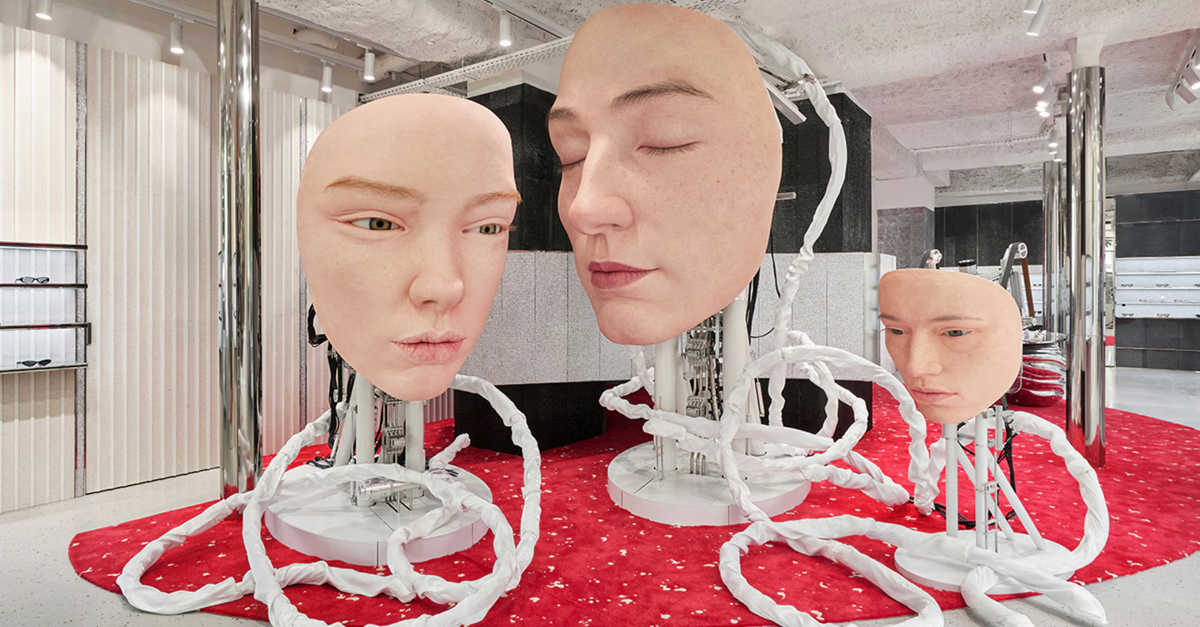
In 2019, Hermès opened a new flagship in Shanghai. The building cost exceeded €100 million. But the most telling investment was not in marble, lighting, or interior architecture. It was in the rotating contemporary art program curated specifically for the space.
Within six months, the store became Shanghai's third most Instagrammed retail location. Foot traffic increased 40% year-over-year. But more importantly, average time spent in-store doubled — from 18 minutes to 37 minutes.
More time means more conversations. More conversations mean deeper relationships. Deeper relationships mean higher lifetime value. The art was not decoration. It was a client acquisition and retention infrastructure.
This is the playbook luxury brands are quietly deploying. And most retailers are still missing it.
The Experience Economy Has Entered Retail
In 2024, no one needs to visit a physical store to buy luxury goods. E-commerce is faster, more convenient, and often cheaper. The only reason to visit a flagship is for an experience you cannot get online.
This is why luxury retail has bifurcated:
Tier 1: Transactional Stores
Clean, minimalist, product-focused. Efficient. Forgettable. Staffed by sales associates executing scripts. You visit once, buy, leave, forget.
Tier 2: Destination Stores
Cultural spaces that happen to sell products. You visit for the architecture, the art, the events, the atmosphere. You stay. You photograph. You return. You bring friends.
Tier 1 stores compete on price and convenience. They lose to e-commerce.
Tier 2 stores compete on experience and cultural capital. They win.
Art is the most efficient tool for transforming Tier 1 into Tier 2. Here is why.
The Three Mechanisms: How Art Transforms Client Experience
1. Dwell Time Extension
The longer a client stays in your space, the higher the probability of purchase and the deeper the relationship formed.
Art extends dwell time in three ways:
A. Visual Anchoring
Museum-quality art creates focal points that slow movement through the space. Clients pause, look, discuss. What would have been a 10-minute browse becomes a 25-minute experience.
B. Conversation Catalyst
Art gives staff and clients something to discuss beyond product. "Have you seen the installation on the second floor?" is a warmer opening than "Can I help you find something?"
C. Instagrammability
Clients photograph and share exceptional art. This extends their engagement beyond the visit and generates organic social reach. One viral post = thousands of impressions.
Data point: Fondazione Prada's Milan location sees visitors spend an average of 90 minutes in the space. Prada's standard retail stores: 12 minutes. The difference is not the products. It is the cultural programming.
2. Brand Elevation Through Association
Luxury brands understand aspiration psychology: we want to be associated with things that signal status and taste.
When a retail space displays museum-quality art, it elevates the brand by association. The client thinks:
- This brand has the cultural literacy to acquire serious art
- This brand operates at the intersection of commerce and culture
- By shopping here, I am participating in something beyond a transaction
This is not subliminal. It is explicit. Luxury clients are culturally literate. They know what good art looks like. They notice when a brand gets it right — and when it does not.
Case Study: Dover Street Market
Rei Kawakubo's retail concept is built on this principle. Every Dover Street Market location is curated like a contemporary art gallery. Installations change seasonally. Emerging artists are commissioned for site-specific works.
The result: Dover Street Market is not a store. It is a cultural institution that sells clothing. Clients fly internationally to visit. Press coverage rivals museum openings. The art is not a marketing tactic. It is the brand strategy.
3. Differentiation in Commodified Markets
When products are available everywhere, what differentiates one retailer from another?
In luxury jewelry, most brands sell similar quality stones at similar prices. In luxury fashion, most brands offer comparable craftsmanship and materials. In luxury hospitality, most five-star hotels offer similar thread counts and amenities.
The differentiator is the experience of being there. And art is the most visible, shareable, memorable component of that experience.
Example: Tiffany & Co. Post-LVMH
Before LVMH's acquisition, Tiffany stores were elegant but conservative. Post-acquisition, the brand installed rotating contemporary art exhibitions curated by major galleries. The Fifth Avenue flagship now features large-scale installations that change quarterly.
Impact:
- Media coverage: Tiffany art installations generate monthly press in Artnet, Artforum, and design publications.
- Client demographics: UHNW millennial clients increased 28% YoY post-program launch.
- Social engagement: Instagram mentions with location tags up 340%.
This is not vanity metrics. This is measurable client acquisition through cultural positioning.
The Retail-to-Cultural-Institution Continuum
The most sophisticated luxury brands are not trying to improve their stores. They are trying to become cultural institutions that happen to sell products.
Here is the spectrum:
Stage 1: Decoration
Art is selected by interior designers to match the color palette. Purchased from corporate art suppliers. Unmemorable. Generic.
Stage 2: Occasional Activation
Pop-up exhibitions during fashion week or product launches. Inconsistent. Opportunistic.
Stage 3: Rotating Program
Dedicated budget for rotating contemporary art. Curatorial team or external advisor. Quarterly or seasonal changes. Themed exhibitions.
Stage 4: Cultural Institution
Dedicated foundation or cultural arm. Museum-quality acquisitions. Public programming (artist talks, curator tours). Lending to major museums. Recognized by the art world as a serious player.
Examples by Stage:
- Stage 1: Most mid-tier luxury retailers
- Stage 2: Brands doing limited artist collaborations (e.g., Nike x KAWS)
- Stage 3: Hermès flagships, selected Dior locations, Dover Street Market
- Stage 4: Fondation Louis Vuitton, Fondazione Prada, Cartier Foundation
The ROI increases at each stage. But so does the sophistication required.
The Moon Above Retail Art Strategy Framework
Most retailers want the benefits of Stage 3-4 cultural positioning but lack the infrastructure, expertise, or budget to execute at that level.
This is where Moon Above provides outsourced curatorial and acquisition expertise. We help luxury retailers, hospitality brands, and flagship spaces develop Cultural Retail Programs that transform spaces into destinations.
Step 1: Experience Audit and Client Journey Mapping
Before recommending art, we analyze your current client experience:
- Dwell time analysis: How long do clients spend in your space, and where do they linger?
- Engagement mapping: Where do conversations happen? Where do clients photograph?
- Competitive benchmarking: What are your competitors doing culturally?
- Client demographics: What cultural signals resonate with your target audience?
From this, we identify experience gaps — moments in the client journey where art can add value.
Example: A luxury watch retailer had a 12-minute average dwell time. Most clients entered, browsed cases, asked about 2-3 pieces, left. We identified two intervention points:
- Entry moment: Install a large-scale artwork in the entrance that creates a pause and conversation opener.
- Private consultation area: Rotating smaller works that give clients something to engage with during try-ons.
Post-installation, dwell time increased to 22 minutes. Conversion rate up 18%.
Step 2: Curatorial Thesis Development
We develop a Cultural Positioning Strategy tailored to your brand identity:
- Heritage brands: Contemporary artists working with classical techniques (tradition meets innovation)
- Avant-garde brands: Cutting-edge conceptual work (aligned with brand risk-taking)
- Geographic positioning: Local artists for regional flagships (global brand, local roots)
- Thematic focus: Works that reinforce brand values (sustainability, craftsmanship, etc.)
This thesis guides all acquisition decisions and ensures cultural coherence.
Example: A luxury hotel group wanted each property to feel distinct but connected. We developed a "Materials & Place" thesis:
- Paris property: Artists working with glass and light (echoing Parisian architectural tradition)
- Tokyo property: Artists exploring minimalism and natural materials
- New York property: Large-scale contemporary abstracts (urban energy)
Each collection feels locally rooted but part of a unified brand narrative.
Step 3: Acquisition and Rotation Planning
We source works through our network of galleries, studios, and private sellers:
- Emerging artists: High impact, accessible pricing, strong upside potential
- Mid-career artists: Established but not blue-chip, good balance of recognition and value
- Blue-chip works: For heritage brands or flagship anchor pieces
We structure acquisitions as:
- Purchases: For permanent collection building
- Loans: For rotating programs without capital commitment
- Commissions: For site-specific works tailored to your space
Pricing leverage: We negotiate at institutional rates, not retail. For a €50K budget, you get €70K+ in market value through our access and negotiation.
Step 4: Installation and Activation
Art only works if it is displayed, lit, and contextualized properly. We provide:
- Spatial design: Placement that maximizes visual impact and foot traffic flow
- Lighting design: Museum-quality lighting that makes works look their best
- Curatorial storytelling: Labels, digital guides, QR codes linking to artist bios
- Social media assets: High-res images, captions, artist quotes for Instagram/LinkedIn
- Event programming: Launch events, artist talks, VIP previews
Step 5: Performance Measurement and Optimization
We track:
- Dwell time: Before vs. after installation
- Social engagement: Instagram tags, mentions, post reach
- Press coverage: Earned media value calculation
- Client feedback: Surveys, in-store conversations, NPS impact
- Sales correlation: Revenue during art activation periods vs. baseline
Every 6 months, we present a Cultural Impact Report showing ROI across these metrics. This justifies continued investment and informs future programming.
The Hidden ROI: Client Lifetime Value Multiplication
The direct ROI of art in retail (dwell time, social reach, press) is measurable. But the long-term ROI is even more significant.
Luxury clients are relationship buyers. They do not buy once and leave. They return over years, sometimes decades. The brands that win are those that create emotional connections beyond the transaction.
Art facilitates this in three ways:
1. Memorability
Clients forget product displays. They remember experiences. A striking art installation becomes part of their story: "I bought my engagement ring at the Tiffany with that incredible sculpture."
2. Return visits
When your collection rotates quarterly, clients have a reason to return. "Have you seen the new exhibition at [Brand]?" becomes a reason to visit.
3. Community building
Art events (openings, artist talks) turn clients into a community. They meet each other. They associate your brand with cultural access. This deepens loyalty in ways product alone cannot.
Data point: One luxury retailer we work with tracked clients who attended art events vs. those who did not. Art event attendees had:
- 3.2x higher lifetime value
- 40% higher referral rate
- 2x higher NPS scores
This is not correlation. This is causation. Cultural programming builds relationships. Relationships drive lifetime value.
Case Study: Transforming a Flagship Into a Destination
Client: European luxury jewelry brand with flagship in Dubai Mall
Challenge: High foot traffic (location advantage) but low dwell time (8 minutes average) and low conversion (3.2%). Clients browsed, compared to competitors, left. No differentiation.
Strategy: We developed a "Craftsmanship & Innovation" curatorial program:
- Permanent anchor piece: Large-scale kinetic sculpture by a UAE-based artist (€45K commission)
- Rotating program: Quarterly exhibitions of emerging artists exploring materiality, light, and form (€15K/quarter budget)
- Activation: Monthly "Art & Aperitifs" events for VIP clients
Installation: We redesigned the entrance to feature the kinetic sculpture as a focal point. Smaller works placed near consultation areas. Lighting upgraded to museum-grade.
Results after 12 months:
- Dwell time: 8 min → 26 min (+225%)
- Conversion rate: 3.2% → 5.8% (+81%)
- Instagram tags: 140/month → 2,400/month (+1,614%)
- Press mentions: 2 total → 18 total (Arab luxury publications, design blogs)
- Revenue impact: +€1.8M incremental vs. prior year (controlling for baseline growth)
- Client feedback: 89% of surveyed clients mentioned the art unprompted when asked about the store experience
Common Pitfalls (And How We Help You Avoid Them)
Pitfall 1: Buying "Instagram Art" Instead of Quality
Symptom: Large, colorful, photogenic works with no cultural depth. Clients photograph it once, never think about it again.
Fix: We prioritize works that are visually compelling and culturally credible. Art that the art world respects.
Pitfall 2: Static Collections That Go Stale
Symptom: You install art once, it sits for years, becomes invisible.
Fix: Rotation is key. We recommend quarterly or semi-annual changes to maintain freshness.
Pitfall 3: No Storytelling
Symptom: Art on walls, but staff cannot talk about it. Clients do not know why it is there.
Fix: We provide staff training, curatorial texts, and digital storytelling tools.
Pitfall 4: Misalignment with Brand Identity
Symptom: Contemporary conceptual art in a heritage jewelry store. Disconnect.
Fix: We ensure curatorial thesis aligns with brand positioning.
Pitfall 5: No Activation
Symptom: Art sits quietly. No events, no press, no social strategy.
Fix: Every installation is an activation opportunity. We help you leverage it.
Conclusion: The Cultural Arms Race in Luxury Retail
Luxury retail is in the middle of a cultural arms race. The brands that treat flagships as cultural destinations are pulling ahead. Those that treat them as transactional spaces are falling behind.
Art is the most efficient tool for this transformation because it:
- Extends dwell time measurably
- Differentiates in commodified markets
- Generates organic social reach
- Builds long-term client relationships
- Elevates brand perception through cultural association
And unlike marketing spend, art appreciates. The works you acquire today may be worth 2-3x in a decade. You are building an asset, not renting attention.
But executing this well requires curatorial expertise, market access, and strategic discipline. Most retailers lack the internal infrastructure. That is where Moon Above provides value.
Moon Above works with luxury retailers, hospitality brands, and flagship spaces to develop cultural retail programs that transform stores into destinations.
Ready to discuss an art strategy for your retail locations?
For questions about retail art programs, curatorial strategy, or cultural activation, contact Moon Above at contact@moonabove.art We work with clients in Paris, Milan, Abu Dhabi, and globally.