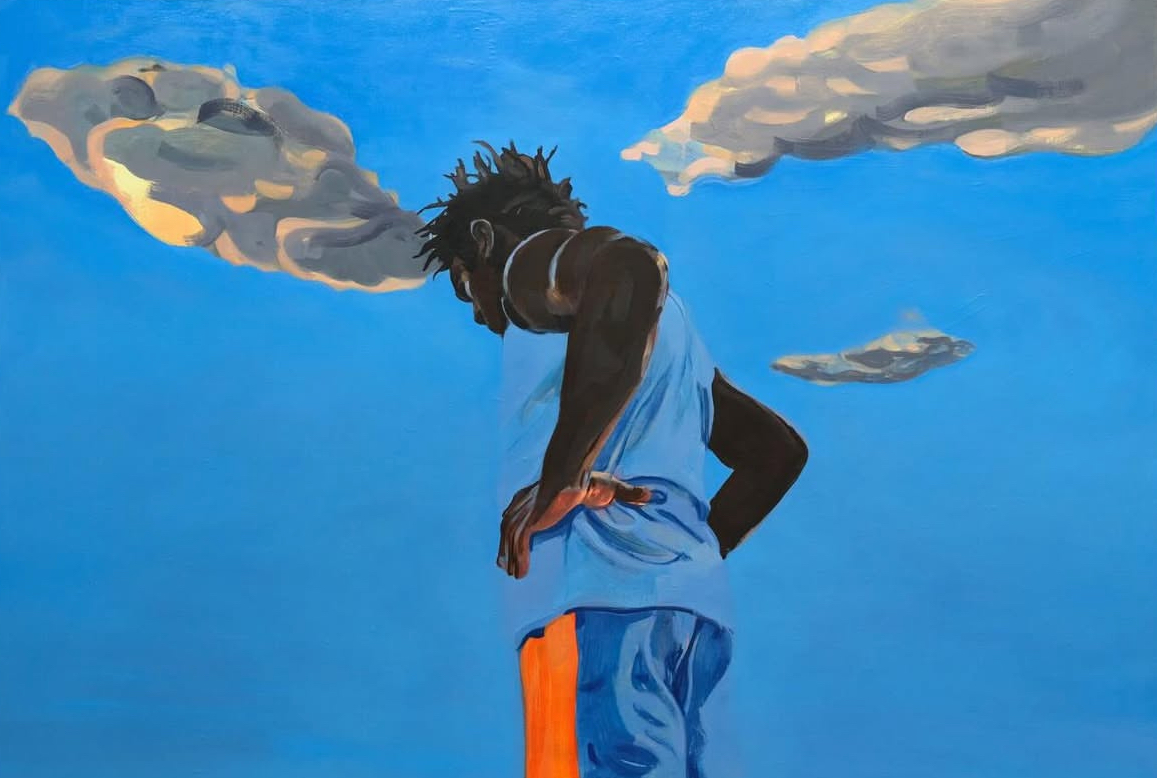
There is a moment every serious collector knows. You are standing in front of a work — at a fair, in a studio, in a gallery you almost didn't enter — and something shifts. Not excitement, exactly. Closer to recognition. The feeling that this object already belongs to you, and that the transaction is merely a formality.
That feeling is real. But learning to trust it — and more importantly, to distinguish it from desire, from novelty, from social pressure — is precisely what separates a great collector from a good one.
Good collectors buy what they love. Great collectors do that too. But they also build something larger than the sum of their purchases: a body of work that has coherence, conviction, and often, a kind of predictive intelligence about where culture was going before culture itself knew.
The Question of Vision
Charles Saatchi didn't simply discover Young British Artists in the early 1990s. He created the conditions for their emergence — buying with a speed and conviction that gave those artists institutional legitimacy before institutions were willing to grant it. When Damien Hirst's shark entered the Saatchi Gallery, the art world was forced to reckon with it. The collection made the argument that criticism couldn't.
This is a defining trait of the great collector: they don't wait for consensus. They form opinions independently, act on them early, and are willing to be wrong publicly. Saatchi was wrong many times. His deaccessions were often as dramatic as his acquisitions. But the failures don't diminish the vision — they authenticate it.
Contrast this with what might be called the consensus collector: someone who buys at auction peaks, acquires based on critical praise already bestowed, and treats the art market like a late-stage growth index. They may accumulate remarkable works. But the collection tells you more about the market than about its owner.
Patience as a Competitive Advantage
Dakis Joannou has been collecting since the 1980s. His relationship with artists like Jeff Koons, Maurizio Cattelan, and Urs Fischer began when these were not yet the canonical figures they are today. What distinguished his approach wasn't only taste — it was duration.
Great collectors build relationships with artists over decades. They visit studios before shows are scheduled. They acquire works that aren't yet for sale. They follow trajectories rather than chasing moments. This longitudinal engagement gives them access that money alone cannot buy: the artist's trust, early access to new bodies of work, and the kind of insight into creative practice that shapes a collection with genuine depth.
The implication for today's collector is significant. In an era of rapid-fire art fair schedules, Instagram previews, and secondary market flipping, patience is a genuine differentiator. The collector who is willing to hold a position in an artist for ten years — through quieter periods, through critical reassessment, through the inevitable dip in institutional attention — will often find that position rewarded in ways that neither financial analysis nor art market indices could have predicted.
The Discipline of a Point of View
Poju Zabludowicz began collecting with a specific thesis: he was drawn to the collision between technology, popular culture, and fine art. His collection didn't try to represent the entire contemporary art world. It staked a position within it.
This is more difficult than it sounds. The art world generates enormous social pressure to acquire broadly — to have the canonical minimalist work, the blue-chip photographer, the emerging painter currently in every gallery conversation. Resisting this pressure requires genuine conviction about what you care about and what you don't.
The most coherent private collections in the world share this quality of editorial restraint. The Rubell Family Collection, Mera and Don Rubell's extraordinary archive of post-war and contemporary art, is built on the premise that the most important moment to engage with an artist is before the world agrees. Over fifty years of collecting, this conviction has produced a collection that reads not as a survey of contemporary art history but as an active intervention in it.
Having a point of view also means being willing to define what your collection is not. Every acquisition is also a refusal — of a thousand other works that money could equally have purchased. Great collectors make those refusals consciously.
The Studio Visit as the Core Practice
Ask any serious collector what separates their best acquisitions from their worst, and they will almost always tell you the same thing: proximity to the artist.
The studio visit is not simply due diligence. It is the essential epistemological act of collecting. Works encountered in a studio — unfinished, unlit by gallery lighting, without the framing of a wall text or a price list — reveal themselves differently. You see the work in process. You understand what came before it and what might come after. You meet the artist not as a figure but as a person with a practice, a set of obsessions, a material intelligence that may not be visible in any single finished work.
Agnes Gund, one of the most consequential collectors and cultural philanthropists of the past century, has spoken at length about the primacy of conversation in her collecting. Not conversation about market value or critical reception — conversation about ideas. What is the artist trying to understand? What problem are they working on? This orientation toward the conceptual interior of a practice, rather than its external symptoms, produces acquisitions with a different quality of intentionality.
The practical corollary: a collector who is only ever present at openings and fairs is working with incomplete information.
On Risk, and the Willingness to Be Early
There is an asymmetry at the heart of contemporary art collecting that is rarely stated plainly: the works that generate the most significant long-term returns — cultural, intellectual, and financial — are almost always acquired before they are widely understood to be significant.
This is not a novel observation. It is, however, one that most collectors struggle to act on. Being early requires not only taste but the psychological capacity to hold a conviction in the absence of external validation. Buying a work that no one yet endorses, by an artist whose name no one yet recognizes, at a price that feels significant relative to the market — this is uncomfortable. It is also precisely where the most important collections are built.
Alain Servais, the Belgian private equity investor and collector, has written candidly about this dynamic. His collection has consistently engaged with artists at the frontier of digital and post-internet practice, often before auction houses had developed the categories to price them. That discomfort — of operating without established benchmarks — is not incidental to the collecting strategy. It is its source of advantage.
The question great collectors ask is not "Is this work valued?" but "Is this work valuable?" — and they have the intellectual confidence to sustain the gap between those two assessments for as long as necessary.
What Great Collectors Don't Do
It is equally instructive to consider the habits that distinguish serious collectors by their absence.
Great collectors don't collect primarily for status validation. There is nothing wrong with deriving social pleasure from a fine collection — the art world is, among other things, a social world, and pretending otherwise is its own form of affectation. But when the acquisition decision is driven by how the purchase will be perceived rather than what the work represents, the collection loses its coherence. It becomes a mirror of social anxiety rather than an expression of genuine vision.
Great collectors don't over-delegate. Advisors, dealers, and curators can be indispensable — for access, for due diligence, for perspective. But the final judgment, in the most important acquisitions, belongs to the collector. Taste cannot be outsourced. A collection built entirely on external guidance reflects those advisors' sensibilities, not the collector's own.
And great collectors don't confuse activity with progress. More acquisitions in more categories at more fairs is not a sign of a maturing collection. It may be the opposite. The best collections often grow more selective, not more comprehensive, over time — as the collector's vision sharpens and the standards they hold themselves to become more demanding.
Building Over Time
Perhaps the most useful way to think about the distinction between good and great collecting is temporal. A good collection is a snapshot of taste at a particular moment. A great collection is a record of thinking across time — of commitments made and sustained, of positions revised in light of new understanding, of a consistent engagement with questions that matter to the collector at the deepest level.
This is why great collections often feel biographical. Encountering the Pinault Collection is an encounter with a sensibility — serious, often dark, consistently drawn to the abject and the political — that has shaped itself over decades. The same is true of the Broad, of the Rubell, of the Boros Collection in Berlin. These are not inventories. They are arguments.
The collectors who build such arguments rarely set out to do so deliberately. They begin with a work they couldn't walk away from, then another, then — years later, looking back — they discover that the choices were more coherent than they seemed at the time. The collection was, all along, trying to tell them something about themselves.
Moon Above works with private collectors, family offices, and institutional clients to build collections that reflect genuine conviction. For inquiries about access, advisory services, and curated acquisition opportunities, please contact us.