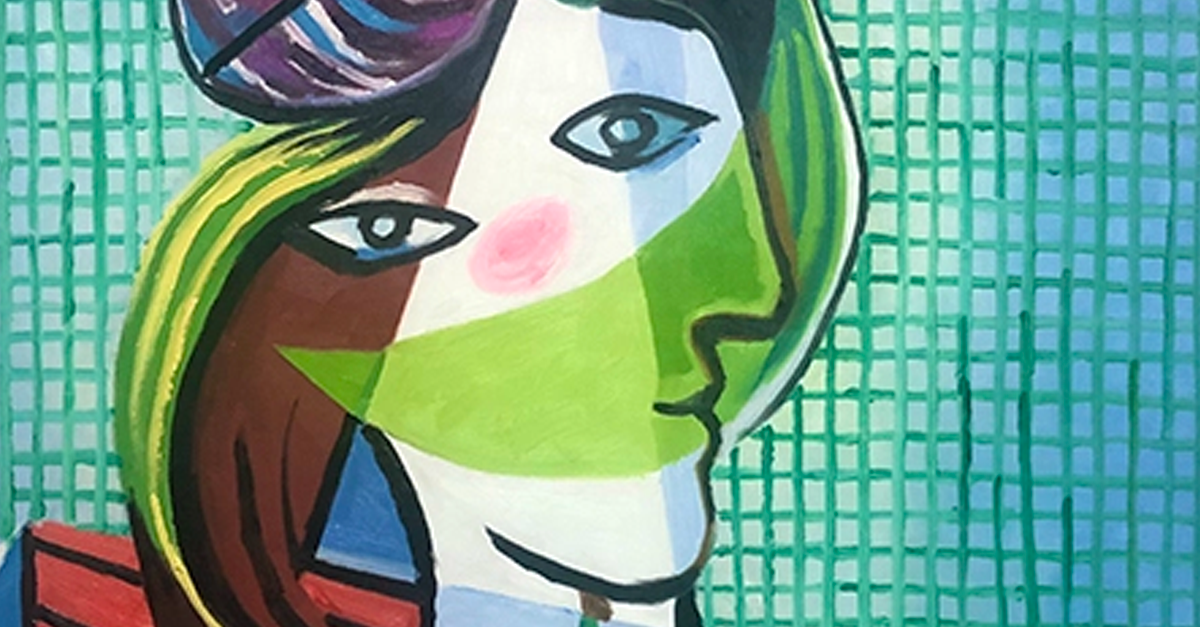
For decades, luxury had a very visible language.
The car.
The watch.
The penthouse.
The logo.
The table at the right restaurant.
The object that could be immediately recognised, photographed and understood.
Status was designed to be seen.
A Lamborghini did not need explanation. It was fast, expensive, loud, rare enough to impress and visible enough to communicate success instantly. It was the perfect symbol for a certain era of wealth: assertive, external, highly recognisable.
But the language of status is changing.
For a growing number of collectors, entrepreneurs, family offices and younger wealth holders, the most powerful object is no longer necessarily the loudest one. It is the one that signals something deeper: taste, education, access, patience, discretion and cultural intelligence.
In that sense, Picasso is the new Lambo.
Not because art has become a toy.
But because the most sophisticated forms of status are moving from visible consumption to cultural ownership.
The shift from luxury object to cultural signal
Luxury has always been about distinction. The question is simply what form that distinction takes.
At one time, the clearest way to signal success was to own what others could instantly recognise as expensive. A supercar, a diamond watch, a branded handbag or a large property communicated wealth without requiring context.
Art works differently.
A Picasso does not only say that someone has money. It says that they have access. It suggests proximity to culture, advisors, dealers, institutions, private banks, estates and a market that is often difficult to enter without knowledge.
The value is not only in the object.
It is in understanding why the object matters.
This makes art a different kind of status symbol. It is quieter, but not weaker. Less immediate, but more sophisticated. It does not shout. It reveals.
The new luxury is not only owning
A Lamborghini can be purchased by anyone with enough money and the right dealership access.
A major artwork cannot be approached in the same way.
The best works are not always publicly available. They may be held in private collections, estates, trusts, foundations, freeports or family offices. They may never reach auction. They may circulate quietly through advisors, galleries and private channels. Even when a collector has the financial capacity, access is not guaranteed.
This changes the nature of desire.
In traditional luxury, scarcity is often manufactured. Limited editions, waiting lists and controlled distribution create a feeling of exclusivity.
In art, scarcity is structural.
There is only one work.
There is one history.
One provenance.
One condition.
One chain of ownership.
One moment in the artist’s career.
One market context.
You cannot produce another 1920s Picasso. You cannot restart the period. You cannot remake the provenance. You cannot manufacture historical importance.
This is why art has become such a powerful cultural signal. It is not simply expensive. It is irreplaceable.
Wealth wants meaning
The shift from cars to art is also a shift from performance to meaning.
A supercar communicates speed, engineering and financial success. It is designed to trigger admiration quickly. But its language is relatively direct.
Art asks for a different type of engagement.
It carries a story. It belongs to a movement, a period, a biography, a market, a set of institutions and a cultural memory. It may have been exhibited, published, inherited, hidden, rediscovered or fought over. It can connect a collector to history in a way that few luxury objects can.
This is increasingly important for modern wealth.
Many high-net-worth individuals no longer want to be seen only as rich. They want to be seen as thoughtful, cultured, strategic, intellectually curious and capable of building something that outlives consumption.
A car depreciates, ages and is replaced by the next model.
A great artwork can become part of a legacy.
From conspicuous consumption to coded distinction
The old status economy was built on visibility. The new one is increasingly built on codes.
Not everyone understands the difference between a decorative work and a museum-quality work. Not everyone knows why a specific date matters in an artist’s career. Not everyone can read provenance, exhibition history, condition, subject matter or market depth.
This creates a more selective form of recognition.
A supercar is understood by everyone.
A Picasso is fully understood by fewer people.
That is precisely the point.
The collector is not only communicating wealth to the broad public. They are communicating taste to a smaller circle: collectors, advisors, curators, gallerists, private bankers, institutions and people who understand cultural value.
In the contemporary status economy, being recognised by the right people can matter more than being recognised by everyone.
Art as identity architecture
A collection is never neutral.
What a person chooses to collect says something about how they see the world. It reflects their relationship to risk, beauty, history, culture, geography, memory, ambition and time.
A car may say: I can afford this.
A collection may say: this is how I think.
This is why art increasingly functions as identity architecture for collectors, families, hotels, private clubs, luxury brands and real estate developers. It does not simply decorate a space. It defines the intellectual and emotional atmosphere around it.
A serious collection can shape how a residence is perceived.
It can elevate a hospitality project.
It can give depth to a brand.
It can become part of a family’s patrimony.
It can communicate values across generations.
The new luxury is not only about what you own. It is about what your ownership says about you.
The social capital of art
Art also creates a different kind of network.
A supercar may open certain doors. Art opens others.
It connects collectors to galleries, museum boards, fairs, foundations, artists, curators, scholars, family offices and cultural institutions. It creates invitations, conversations and forms of access that are not purely commercial.
This is one of the reasons art has become so attractive to sophisticated wealth. It produces social capital as well as aesthetic and financial value.
The collector does not simply acquire an object. They enter an ecosystem.
This ecosystem is global, discreet and relationship-driven. It moves between Paris, London, New York, Basel, Geneva, Dubai, Abu Dhabi, Doha, Hong Kong, Miami and beyond. It includes public institutions and private rooms, museum dinners and storage facilities, auction previews and confidential viewings.
In this world, taste becomes a passport.
But art is not just another luxury category
There is a danger in saying “Picasso is the new Lambo.”
The danger is to reduce art to status consumption.
That would be a mistake.
Art is not simply a more sophisticated luxury product. It carries responsibilities that most luxury objects do not. Authenticity matters. Provenance matters. Condition matters. Title matters. Cultural context matters. The history of the object matters.
A collector should not approach a major artwork as if buying a car.
The process is different. The risks are different. The market is different. The expertise required is different.
This is why advisory matters.
The more art becomes part of the status economy, the more important it becomes to distinguish serious collecting from superficial acquisition. Buying art to impress is easy. Building a meaningful collection is much harder.
The first is consumption.
The second is strategy.
The rise of cultural wealth
The deeper trend is not that cars are disappearing, or that traditional luxury no longer matters. The deeper trend is that wealth is looking for more sophisticated forms of expression.
The new luxury consumer does not only want rare objects.
They want cultural relevance.
They want access.
They want narrative.
They want legacy.
They want intellectual credibility.
They want something that cannot simply be ordered, replicated or replaced.
Art answers that desire better than almost any other category.
A major artwork can be a financial asset, a cultural object, a social signal, a legacy instrument and an emotional anchor at the same time. Few objects carry that many layers simultaneously.
That is why art sits increasingly close to private banks, family offices, luxury brands, hospitality groups and real estate developers.
It is no longer outside the architecture of wealth.
It is becoming one of its most expressive forms.
The new symbol of status is quieter
Picasso is the new Lambo because the strongest status symbols are becoming quieter, rarer and more coded.
They do not need to perform for everyone.
They do not need to be loud.
They do not need to be immediately understood.
They need to matter.
The collector of tomorrow may still enjoy cars, watches and visible luxury. But the most powerful signal will increasingly be cultural: the ability to recognise, acquire, protect and live with objects that carry historical weight.
A supercar says something about speed.
A Picasso says something about time.
And in the new language of wealth, time may be the ultimate luxury.
Moon Above advises private clients, collectors and institutions on acquisition strategy, collection development and the cultural positioning of art within broader wealth, lifestyle and legacy objectives.